MORE THAN SOCCER.
A BETTER WAY TO DEVELOP.
At Thrive Sports Club, we believe young athletes develop best when they are actively involved, challenged to make decisions, encouraged to try new things, and having fun along the way.
Our approach combines small-sided soccer, age-appropriate development, and the THRIVE Method™ to help children become better players, confident teammates, and lifelong athletes.
The Thrive Method™
Great athletes develop more than technical skills. Every Thrive program is built around six principles that shape how we coach, compete, learn, and play.
Teamwork
Communicate, support teammates, and celebrate success as a team.
Heart
Compete with effort, courage, resilience, and a willingness to keep trying.
Respect
Respect teammates, opponents, coaches, parents, and officials.
Improvement
Getting better every day. We focus on progress over perfection.
Versatility
Learn new skills and solve problems. Well-rounded athletes are better athletes.
Enjoyment
Never lose sight of why kids play. We are here to have fun.
Why small-sided soccer?
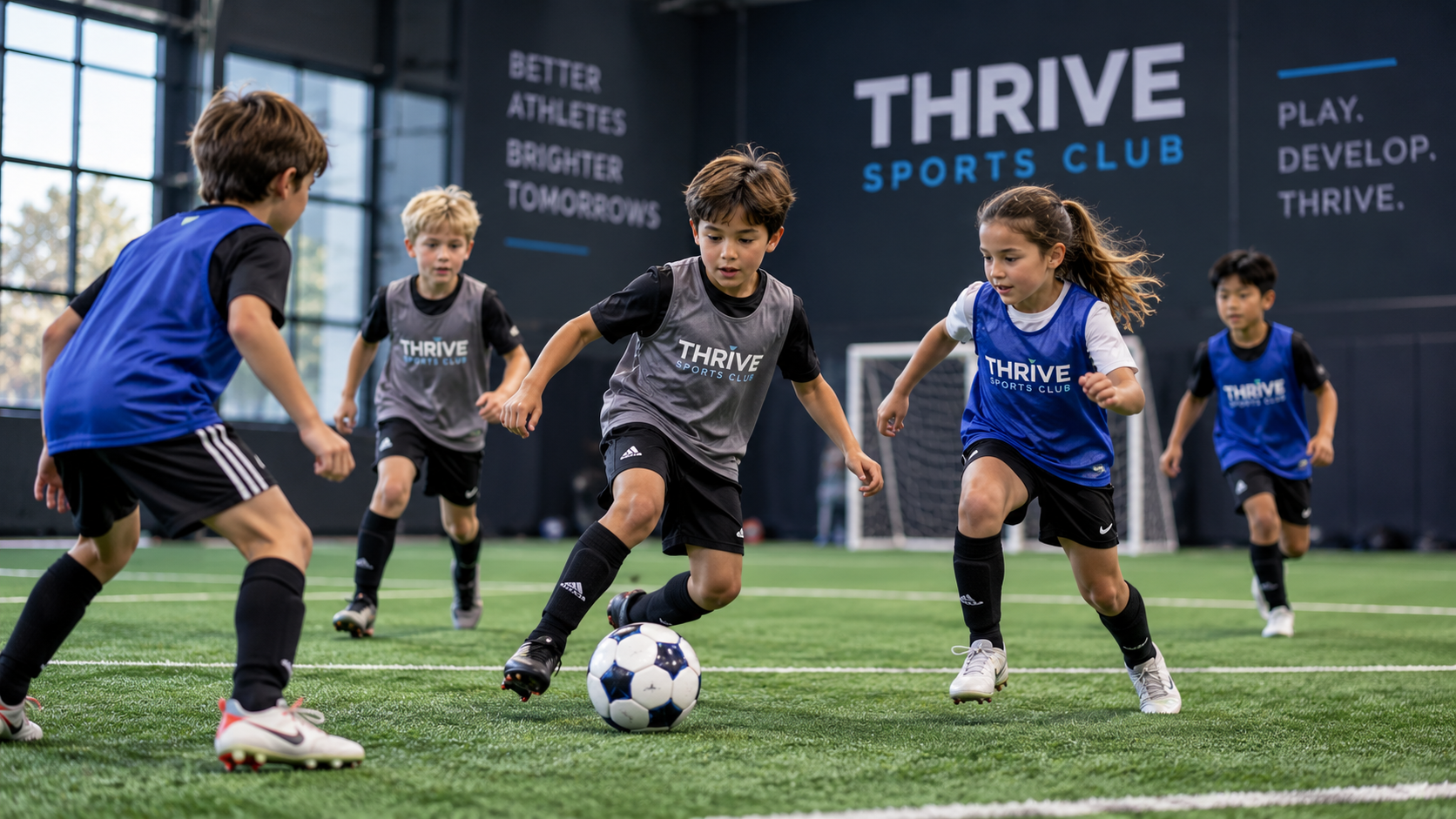
Put fewer players in a smaller space and something important happens: every player becomes more involved.
There are more touches on the ball, more 1v1 situations, more opportunities to attack and defend, and more
decisions to make. Instead of waiting for the game to come to them, young players are constantly participating in it.
That's why small-sided play is at the heart of the Thrive approach.
MORE TOUCHES → MORE DECISIONS → MORE CONFIDENCE → MORE FUN
Small-Sided Roots. World Class Players.
Small-space soccer and futsal have played a role in the development of some of the world’s most creative players.

Neymar
Neymar grew up playing futsal alongside soccer in Brazil and has credited the small-space game with helping develop his close control, agility and ability to react quickly.

Lionel Messi
Messi played futsal during his early development in Argentina—another example of how small-sided environments can encourage creativity, close control, quick decision-making, and comfort on the ball.
THE LESSON ISN'T TO CREATE THE NEXT SUPERSTAR.
It's to create the right environment for every young player. Small-sided soccer gives children more opportunities to touch the ball, solve problems, take risks, compete, succeed, make mistakes, and try again.